
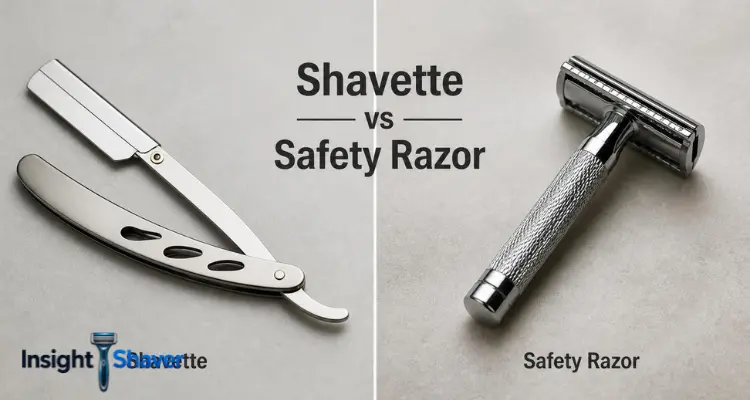
Why This Comparison Usually Gets Answered Badly
Most “shavette vs safety razor” articles just describe both tools and let you figure out the rest yourself. That’s not particularly helpful when you’re standing in front of two very different shaving philosophies trying to decide where to spend your money.
So instead of a straight feature dump, this guide is split by intent — what you’re actually trying to figure out when you land on a page like this. Maybe you just want the fast verdict. Maybe you’re weighing cost against how close a shave you’ll actually get. Maybe you’re a total beginner wondering which one won’t leave your face looking like a crime scene on week one.
Find your section, get your answer, and go shave.
Section 1: “Just Tell Me Which One’s Better” (Quick Answer Intent)
There isn’t a single winner here, and anyone who tells you otherwise is selling something. But if you need a fast lean:
Choose a safety razor if: you want speed, an easier learning curve, and a shave that’s genuinely safer for daily use.
Choose a shavette if: you have time to spare, you want the closest possible shave, and you don’t mind a slower, more deliberate routine.
A safety razor is faster and more forgiving. A shavette is closer and more precise. That trade-off is really the whole comparison in one sentence — everything below just explains why.
Section 2: “What Actually Is Each One?” (Informational / Definition Intent)
What Is a Shavette Razor?
A shavette functions almost identically to a traditional straight razor, except the blade itself is a disposable razor blade rather than a fixed, sharpenable edge. Once the blade dulls, you toss it and load a fresh one — no honing or stropping required.
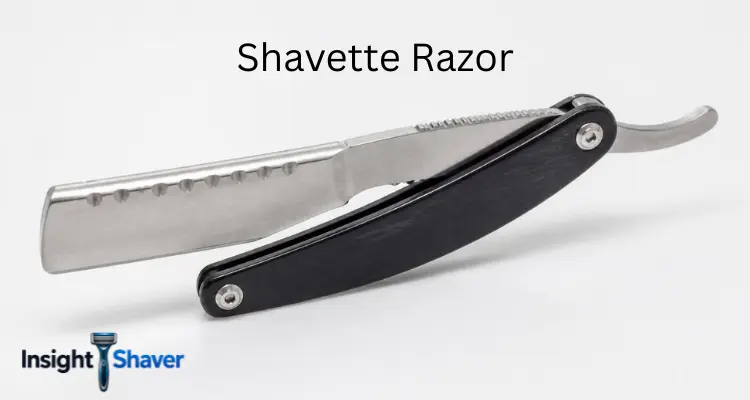
Blade housing designs vary between brands. Some shavettes, like the Dovo, use a caddy system the blade slots into. Others, like the Parker SRX, fan open and clip around the blade directly. Either way, the shaving motion and handling feel remain closer to a straight razor than anything else in wet shaving.
Shavettes actually originated in professional barbershops, back when barbers needed a way to offer a straight-razor-style shave without sterilizing (autoclaving) a fixed blade between every single customer. A disposable cutting edge solved that hygiene problem instantly.
What Is a Safety Razor?
The safety razor is probably the most recognizable tool in the wet shaving world. It’s a handle attached to a double-headed metal housing that clamps a disposable blade in place, typically secured with a threaded screw running through the handle.
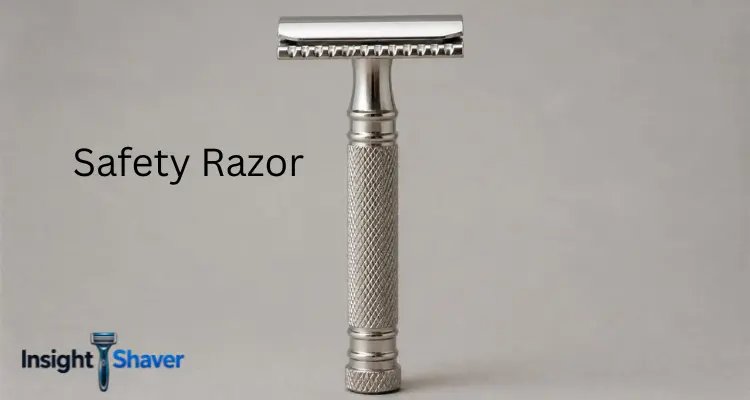
Most safety razors use a double-edge (DE) blade, meaning both cutting edges are usable, which lets the blade dull more slowly and evenly since you’re not wearing down a single edge exclusively. Single-edge (SE) safety razors exist too, though they’re far less common.
The defining feature is the comb, sometimes called a safety bar, sitting just below the blade edge. This is what separates a safety razor from a straight blade against bare skin — it’s the entire reason the tool is called “safety” in the first place.
Open comb vs. closed comb matters here. Closed comb razors have a solid safety bar that glides across your skin ahead of the blade, keeping skin taut and protected. Open comb razors skip that bar in favor of exposed metal teeth, which guide whiskers closer to the blade for a more aggressive, straight-razor-adjacent shave — think something like the Muhle R41, which has a blade angle that’s nearly as steep as a shavette’s.
Section 3: “How Much Is This Actually Going to Cost Me?” (Cost / Commercial Intent)
This is usually where the decision actually gets made, so let’s be specific.
Safety razor pricing:
A genuinely good safety razor typically runs $30 to $50 USD. There are outliers on both ends — budget options starting around $20, and boutique pieces well past $100 — but $30 to $50 is where quality and durability meet a reasonable price for a regular shaver.
Shavette pricing:
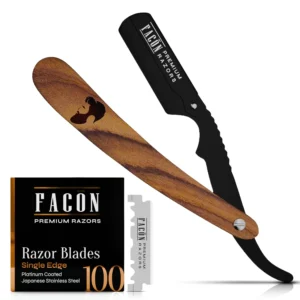
This category has a wider spread. Entry-level shavettes start around $20 and plateau near $35 for a solid, everyday option. At the top end, premium shavettes can run as high as $250, representing some of the best-made razors in the world — but that’s not remotely where a first-time buyer should start.
If you’re strictly budget-conscious, a shavette will usually beat a comparable safety razor by roughly $10 to $20. Whether that gap matters depends entirely on your situation — pocket change for some, a real deciding factor for others.
One thing both tools share: neither is a one-time purchase. Disposable blades are an ongoing cost for both, so factor that into whichever direction you lean.
Section 4: “How Do I Actually Use One?” (How-To / Process Intent)
Shaving With a Shavette
The technique mirrors straight razor shaving almost exactly. You work slowly and methodically across each section of your face, holding the skin taut with your off-hand while the shaving hand does the work.
A typical routine runs three passes: with the grain, across the grain, and against the grain, re-lathering between passes and often switching pre-shave products to guard against irritation and cuts along the way.
Done properly, this produces the closest shave available in wet shaving — skin left genuinely smooth, not just “shaved.” Some shavers find they can go every other day without visible stubble showing at all, purely because of how close the cut is.
The tradeoff is speed and risk. You’re dragging an exposed blade edge across your skin with minimal built-in protection, so rushing is where cuts happen. The small cutting edge also means more passes to fully cover your face, which adds time and — for anyone with a larger jawline — more opportunities to nick yourself along the way.
Shaving With a Safety Razor
The learning curve here is noticeably gentler. The post-style handle feels more intuitive to most people than a shavette’s folding handle, especially coming from cartridge razors.
The process still typically runs three passes plus a cleanup pass, alternating the blade’s two edges as you move down your face. What changes is speed — the built-in safety bar lets you move faster with meaningfully less risk of cutting yourself, which is really the entire point of the comb design.
The compromise is closeness. A safety razor shave, even done well, tends to leave a few spots needing cleanup that a shavette would have caught in the first pass. You trade some closeness for a faster, more forgiving process.
Section 5: “Which One Is Safer / Better for Beginners?” (Beginner Intent)
If you’re brand new to wet shaving specifically, the safety razor is the more forgiving starting point. The safety bar does real protective work, the handle style is more intuitive, and the learning curve is shorter before you get a clean, comfortable shave without regular nicks.
A closed comb safety razor is the gentlest entry point of all. Open comb designs, while still safer than a shavette, sit closer to the aggressive end of the safety razor spectrum and are better suited to shavers who’ve already built some confidence.
Shavettes aren’t off-limits to beginners, but they demand patience and a slower hand from day one. If you’re specifically interested in eventually moving to a full straight razor, a shavette is actually a smart, lower-cost way to build that skill first — you get the same technique and handling without the ongoing cost and effort of stropping and honing a fixed blade.
Section 6: “What’s the Real Difference in Results?” (Comparison Intent)
Cutting through the branding, the core comparison comes down to three things:
Closeness of shave: Shavette wins clearly here. The technique and blade exposure simply cut closer to the skin than a safety razor’s protected edge allows.
Speed: Safety razor wins clearly here. Faster strokes, less required precision per pass, and a shorter total routine.
Risk of cuts and irritation: Safety razor wins here too, largely because of the comb/safety bar design that a shavette simply doesn’t have.
Where both tools are genuinely equal is blade quality dependency. Neither razor design will save you from a bad blade — the shave quality on both ultimately comes down to the blades you’re loading in. Muhle, Merkur, and Lord blades are consistently reliable picks across both formats, gliding smoothly and holding an edge across multiple shaves. Cheap blades will make either razor feel rougher and less controlled than it should.
Which One Should I Actually Buy
Match the razor to your actual routine, not the aesthetic you like better.
Pick a safety razor if:
- ✅ You’re new to wet shaving and want a gentler learning curve
- ✅ Mornings are rushed and speed matters
- ✅ You want the safest option with the lowest cut risk
- ✅ You’d rather shave daily than every other day
Pick a shavette if:
- ✅ You have 30 minutes to an hour available for a proper shave
- ✅ You want the closest possible result, especially for a big event
- ✅ You enjoy precision detailing around a beard line, mustache, or sideburns
- ✅ You’re curious about eventually trying a full straight razor
Watch out for these downsides either way:
- ❌ Shavette: slower routine, exposed blade risk, more passes needed on larger faces
- ❌ Safety razor: won’t match a shavette’s closeness, open comb versions still carry real nick risk
If you already own a safety razor and shaving has become more of a hobby than a chore, picking up a shavette as a second tool is a genuinely fun upgrade — even if it doesn’t fully replace your daily razor, it’s a great way to level up detail work around the edges of a beard.
Frequently Asked Questions
What is the difference between a shavette and a safety razor? A shavette uses a disposable blade in a straight-razor-style housing with no built-in safety bar, giving a closer but riskier shave. A safety razor holds a blade behind a protective comb, trading some closeness for speed and safety.
Which razor gives a closer shave? The shavette. Its blade exposure and straight-razor technique cut closer to the skin than a safety razor’s protected design allows.
Is a shavette good for beginners? It’s usable by beginners, but it demands more patience and a slower learning curve than a safety razor. First-timers to wet shaving generally have an easier start with a closed comb safety razor.
Is a safety razor safer than a shavette? Yes. The comb or safety bar built into a safety razor is specifically designed to reduce cut risk, something a shavette doesn’t have.
How much does a safety razor cost? Most quality safety razors run $30 to $50 USD, with budget options near $20 and premium pieces well over $100.
How much does a shavette cost? Entry-level shavettes start around $20 and plateau near $35 for solid everyday use, while top-tier professional shavettes can reach $250.
How many passes should I do when shaving? Three is standard for both tools — with the grain, across the grain, and against the grain — followed by an optional cleanup pass for any missed spots.
What blades are best for safety razors? Muhle, Merkur, and Lord blades are consistently reliable and hold an edge well across multiple shaves, though personal preference plays a role too.
Can a shavette be used daily? It can, and its closeness means some shavers only need to shave every other day to stay smooth. Just be prepared for the longer, slower routine each time.
Which razor is faster to use? The safety razor, largely thanks to its safety bar allowing quicker, more confident strokes with less need for the slow, deliberate technique a shavette requires.
Final Word
Neither razor is objectively “better” — they’re built around different priorities, and the right pick depends entirely on how much time you’re willing to trade for how close a shave you actually want.
If your mornings are rushed and you just want a clean, safe shave without drama, a safety razor will serve you well for years. If you’ve got the patience for a slower ritual and want the closest shave wet shaving can offer, a shavette is worth learning properly — and it might even be the gateway that gets you into straight razor shaving down the line.